China has become a major sourcing destination for modular furniture, serving homes, offices, hotels, and retail spaces worldwide. Reliable suppliers combine factory production, design support, and export experience. They may produce wardrobes, kitchens, shelving systems, workstations, and movable partitions with standardized components. These systems can be rearranged when a room changes. That practical flexibility explains why many buyers ask, “what are the benefits of modular furniture?”
Working with established Chinese suppliers can offer competitive pricing, broad customization, and scalable production. Buyers may select board finishes, hardware, dimensions, colors, packaging, and assembly methods. A well-organized factory can also provide samples, technical drawings, quality inspections, and container-loading guidance. Small details matter. A soft-close hinge, reinforced corner, or clearly labeled package can prevent costly installation problems. However, the lowest quotation is not always the best choice. It may exclude testing, spare parts, or protective packaging.
This outline examines how leading suppliers manage design, materials, manufacturing, quality control, logistics, and after-sales support. It also considers important risks, including inconsistent batches, unclear specifications, and delayed communication. Factory audits, verified certifications, reference projects, and written inspection standards improve purchasing confidence. Still, no supplier is perfect. Even experienced buyers should question assumptions, compare samples, and review performance after delivery. Practical evidence matters more than attractive brochures.
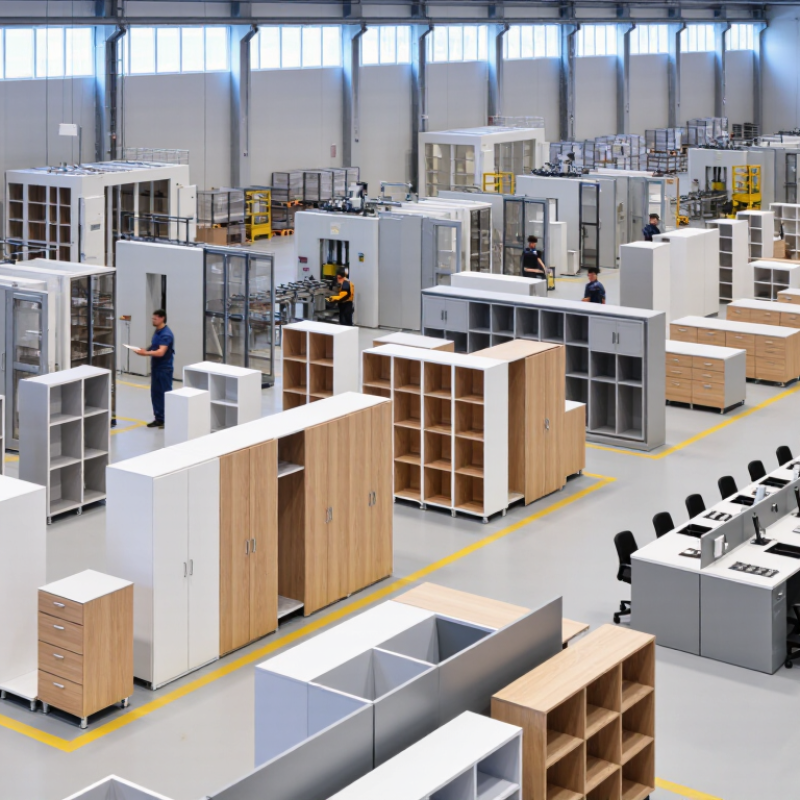
Modular furniture is built from separate units that fit together in planned combinations. A cabinet may include panels, shelves, doors, legs, and standard connectors. You can arrange these parts as one storage wall, two bedside units, or a compact office desk. The structure changes without replacing every piece.
In practical use, accurate measurements matter more than attractive drawings. Check the wall width, ceiling height, door swing, and electrical outlets before ordering. During installation, installers usually connect frames, level the legs, and secure the furniture to the wall when required. Good suppliers provide clear assembly guides, consistent drilling positions, and replacement hardware. These details reduce delays and make future repairs easier.
Modular systems also support gradual changes. A growing family might add shelves, while a small business could remove a desk section after moving offices. Materials should resist daily handling, moisture, and repeated assembly. However, modular furniture is not automatically perfect. Connectors can loosen, color batches may vary, and poorly measured rooms create visible gaps. I have seen attractive layouts fail because cable space was ignored. A reliable supplier should confirm load limits, panel thickness, finishes, packaging, and quality checks before production. Photographs help, but physical samples reveal edges, textures, and alignment more honestly. That extra inspection takes time. It often prevents expensive corrections later.
Why Choose China for Modular Furniture Manufacturing?
China remains a practical choice for modular furniture manufacturing because its supply chain is highly developed. Panel cutting, edge banding, hardware production, packaging, and assembly can often happen within one region. This reduces transport between factories and helps control production schedules. Skilled manufacturers can also produce wardrobes, kitchen units, office storage, and display systems with consistent dimensions. Custom colors, surface finishes, and flat-pack structures are usually easier to arrange at scale.
Cost is another benefit, but low pricing should not be the only decision. Experienced buyers compare material samples, production tolerances, packaging strength, and replacement procedures. A reliable supplier should explain its board thickness, hardware specifications, moisture resistance, and inspection process clearly. Factory audits and pre-shipment checks can reveal small problems, such as uneven edges or weak corner protection. These details affect installation later.
Tips: Request a physical sample before placing a large order. Ask for drawings with exact measurements. Confirm the packing method for each module. Review production photos, inspection records, and delivery terms. Leave time for revisions, because the first design is rarely perfect. Some suppliers communicate quickly but document details poorly. That gap deserves attention.
| Evaluation Dimension | Typical Industry Data or Capability | Benefit for Modular Furniture Buyers | Practical Application |
|---|---|---|---|
| Manufacturing Ecosystem | China has established furniture production clusters with supporting industries for panels, metal hardware, upholstery, glass, lighting, packaging, and logistics. | Multiple production processes can be coordinated within one sourcing market, reducing supplier fragmentation and communication complexity. | Useful for complete room systems, office furniture packages, hospitality projects, and residential storage solutions. |
| Material Selection | Common options include particleboard, MDF, plywood, solid wood, powder-coated steel, aluminum, tempered glass, laminate, veneer, and fabric finishes. | Buyers can balance appearance, durability, weight, moisture resistance, and budget within the same modular design. | Suitable for wardrobes, kitchens, shelving systems, workstations, cabinets, and movable partitions. |
| Customization Flexibility | Modular products can usually be configured by dimensions, colors, surface finishes, hardware, internal layouts, cable management, and packaging requirements. | Makes it easier to adapt one product platform to different room sizes, markets, and customer preferences. | Appropriate for private-label collections, contract projects, apartment developments, and retail customization programs. |
| Space Efficiency | Modular units are designed as repeatable components that can be combined, separated, expanded, or rearranged without replacing the entire system. | Improves the use of limited floor area and supports future changes in room function or occupancy. | Effective in compact apartments, co-working areas, student housing, hotels, and multi-purpose offices. |
| Production Scalability | Standardized modules allow repeated cutting, drilling, edging, finishing, assembly, and quality-control procedures across larger production runs. | Repeat orders can be reproduced more consistently than fully one-off furniture, while new configurations can be developed from existing components. | Helpful for multi-location projects, phased developments, catalog products, and recurring wholesale orders. |
| Packaging and Shipping | Flat-pack and knock-down construction reduces the volume of many furniture units during storage and transportation compared with fully assembled products. | Can improve container utilization, simplify warehouse handling, and reduce the risk of damage caused by oversized assembled units. | Well suited to export orders, e-commerce fulfillment, installation on site, and projects with restricted access routes. |
| Installation Efficiency | Pre-drilled panels, numbered components, standardized connectors, and assembly instructions can be incorporated into modular product designs. | Supports faster installation and makes replacement or reconfiguration easier after delivery. | Valuable for projects involving repeated room layouts or installation teams working across multiple locations. |
| Quality Control | A structured inspection process may cover incoming materials, dimensions, edge finishing, surface quality, hardware operation, load performance, and final packaging. | Standardized checkpoints help identify defects before shipment and improve consistency between production batches. | Recommended for buyers requiring approved samples, inspection reports, material documentation, and batch traceability. |
| Compliance Support | Export furniture projects may require documentation related to formaldehyde emissions, material safety, fire performance, packaging, and destination-market requirements. | Early specification of applicable standards helps reduce customs, installation, and market-entry risks. | Important for commercial interiors, public buildings, hospitality projects, and regulated destination markets. |
| Lifecycle Value | Individual modules, panels, fittings, or doors can often be replaced, upgraded, or rearranged instead of discarding an entire furniture system. | May extend product usability and reduce waste when layouts, finishes, or damaged components need to be changed. | Suitable for offices, rental properties, hotels, educational spaces, and rapidly changing commercial environments. |
Note: Capabilities, materials, certifications, minimum order quantities, lead times, and shipping costs vary by product specification, factory, order volume, and destination market. Confirm all technical details before placing an order.
Identifying China’s top modular furniture suppliers requires more than comparing catalog prices. Start by checking whether the factory actually produces modular systems in-house. Ask for production photos, workshop addresses, and recent project references. A polished catalog is not proof. I learned that the hard way.
Request samples with the same finishes, connectors, panels, and hardware used in mass production. Check alignment, edge sealing, drawer movement, and surface resistance. Measure every component against the approved drawings. Small errors can create major installation problems. Reliable suppliers explain their quality-control process clearly. They should also provide material reports, safety documentation, and inspection records from recognized testing bodies.
Evaluate communication before signing an order. Can the supplier answer technical questions without vague promises? Confirm minimum order quantities, production capacity, packaging methods, replacement policies, and realistic lead times. Visit the factory when possible, or arrange a live video audit. Compare the sample with the final production batch through an independent inspection. Price matters, but inconsistent dimensions can cost more than a higher quotation. I would also test a small trial order before committing to a large project. No supplier is flawless; transparent correction is often more valuable than impressive claims.
Modular furniture suppliers provide more than movable cabinets and desks. They offer a practical system for changing spaces. Grand View Research valued the global modular furniture market at about USD 57.4 billion in 2022. Its forecast also indicates continued growth through 2030. This demand reflects flexible offices, compact homes, and faster renovation cycles.
Suppliers can customize dimensions, finishes, storage layouts, and connection systems. A project manager may adjust a 1,200-millimeter workstation without replacing the entire row. Standardized components also simplify ordering and replacement. That saves space. It can reduce installation time and labor costs, although savings depend on accurate measurements and clear specifications. Experienced suppliers usually provide drawings, samples, load information, and installation guidance. These details reduce expensive site errors.
Modularity may support sustainability through repair, reuse, and relocation. The 2024 Circularity Gap Report estimated that only 7.2% of the global economy was circular. Suppliers using replaceable panels and recyclable materials can help improve that figure. However, modular furniture is not automatically green. Poor-quality hardware, excessive packaging, and frequent style changes create waste. Buyers should request material certificates, durability testing, and take-back options. Quality control records matter. So does honest after-sales support. A low purchase price may look attractive, but unstable connectors or mismatched batches can create long-term costs. The best supplier relationship remains practical, transparent, and open to review.
Modular furniture suppliers help buyers improve space efficiency, simplify transportation, support future reconfiguration, and reduce installation complexity. The chart uses a 0–100 comparative benefit index based on common modular-furniture purchasing criteria; it does not represent any individual company or brand.
Comparing modular furniture suppliers requires more than checking a catalog. Inspect panel density, edge sealing, hardware strength, and surface consistency. A reliable supplier should provide material certificates, production photos, and a clear quality-control process. Ask for a sample cabinet before approving bulk production. Check whether doors align properly and drawers open smoothly. Small defects often become expensive problems in hotel or apartment projects.
Cost deserves a wider review than the unit price. Compare packaging, tooling, shipping terms, replacement policies, and installation support. A cheaper quotation may exclude stronger hinges, protective corners, or export-grade cartons. Customization also needs measurable details, including dimensions, colors, cable holes, finishes, and assembly methods. Service quality appears in response speed and drawing accuracy. Suppliers should confirm revisions in writing and provide realistic production schedules. No supplier is perfect. Even experienced buyers can overlook one detail.
Tips: Request two samples with different finishes. Test assembly with ordinary tools. Compare written specifications line by line. Ask how damaged parts are replaced. Keep a record of approvals, measurements, and delivery promises. A short video inspection can reveal uneven gaps, poor wrapping, or weak fittings. Allow extra time for revisions, because rushed customization often creates avoidable mistakes.
Modular furniture uses separate panels, shelves, doors, legs, and connectors. These units form storage walls, bedside tables, or compact desks. The layout can change without replacing everything.
Installers connect frames, level the legs, and secure units when needed. Standard drilling positions make assembly and repairs easier. Good instructions reduce installation delays.
Measure wall width, ceiling height, door swing, and electrical outlets. Leave space for cables and opening doors. Measure twice.
Yes. You can add shelves, remove desk sections, or rearrange storage units. This suits growing families and changing offices. However, extra parts may not match perfectly later.
Request physical samples using production finishes, connectors, panels, and hardware. Check door alignment, drawer movement, edge sealing, and surface resistance. Pictures help, but samples reveal more.
Ask for material reports, safety documents, inspection records, and approved drawings. Confirm panel thickness, load limits, finishes, packaging, and replacement policies. Vague answers deserve caution.
Compare more than the unit price. Include packaging, tooling, shipping, installation support, and replacement costs. A cheaper quote may use weaker hinges or thinner protection.
Connectors may loosen, color batches may differ, and poor measurements can create visible gaps. Moisture and repeated assembly may also affect materials. Modular does not mean flawless.
Modular furniture is designed from interchangeable units that can be combined, rearranged, expanded, or replaced according to changing space and lifestyle needs. This flexible system makes it suitable for homes, offices, hotels, and commercial environments. China is a strong manufacturing destination because it offers extensive production capabilities, efficient supply chains, skilled labor, and a wide range of material and design options. Buyers can also benefit from competitive pricing and scalable production when working with suitable suppliers.
When identifying China’s top modular furniture suppliers, customers should evaluate product quality, manufacturing experience, certifications, customization capabilities, communication, delivery reliability, and after-sales service. The key question is, what are the benefits of modular furniture? Its major advantages include space efficiency, easy installation, design flexibility, convenient transportation, simple maintenance, and the ability to adapt as requirements change. To compare suppliers effectively, buyers should review samples, material specifications, production processes, quotations, customization terms, lead times, packaging standards, and service commitments before making a decision.

Salonix Furniture