China Best Furniture for Small Apartments How to Choose?

Time:2026-10-20 Author:Charlotte
0%

Choosing furniture for a small apartment in China requires more than finding attractive, low-priced pieces. Every centimeter matters, especially near a narrow entrance, compact kitchen, or shared living area. A deep sofa can block movement, while a beautiful cabinet may make a room feel crowded.

This guide explains how to choose furniture for small apartments through practical measurements, material checks, and reliable supplier research. Start by measuring wall lengths, doorways, lift dimensions, and available floor space. Leave clear walking paths around beds, tables, and storage units. A 120-centimeter sofa may fit perfectly, but its packaging might not pass through an 80-centimeter doorway.

Look for multifunctional designs, such as beds with drawers, nesting tables, folding desks, and wall-mounted storage. Light-colored wood, slim legs, and reflective surfaces can create a more open visual effect. However, appearance should not replace quality. Check board thickness, edge sealing, hardware strength, and formal safety documentation before buying.

Supplier reliability also deserves close attention. Request real product photographs, detailed dimensions, material descriptions, and sample orders when possible. Reviews can help, but they may not reveal long-term problems, such as loose hinges or peeling surfaces. I have seen attractive furniture fail because buyers ignored installation space and daily habits.

There is no perfect formula. A foldable table may save space but feel inconvenient every day. Careful comparison helps balance comfort, durability, budget, and room size. With realistic planning, Chinese furniture can support a smaller home without making it feel cramped.
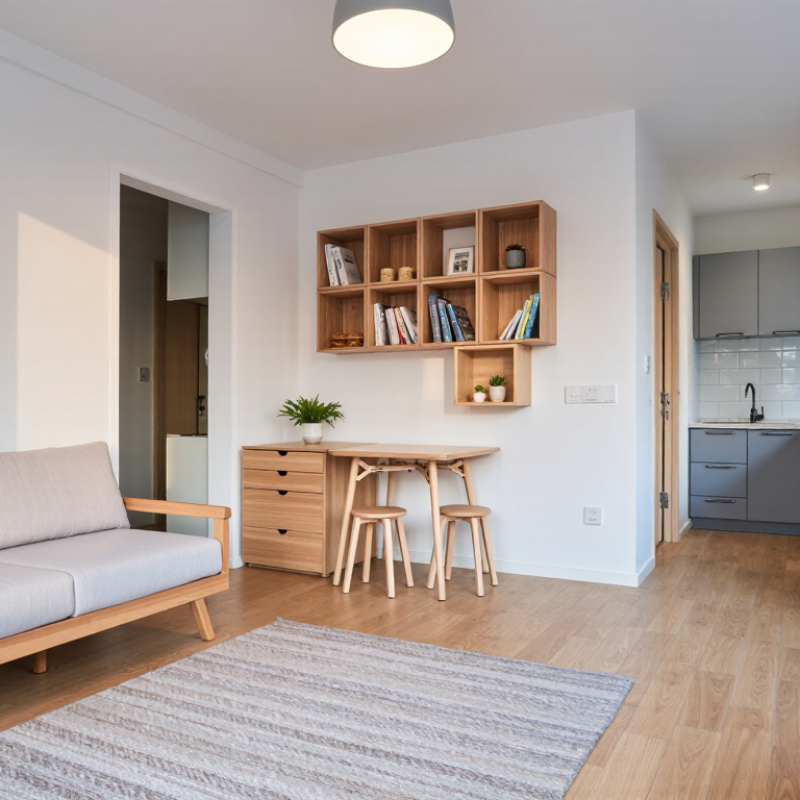
China Best Furniture for Small Apartments How to Choose?

Understanding Small-Apartment Furniture Needs in China

Understanding small-apartment furniture needs in China starts with household patterns, not decoration trends. China’s 2020 Population Census recorded an average household size of 2.62 people. Meanwhile, the National Bureau of Statistics reported a 66.16% urbanization rate in 2023. These figures suggest flexible furniture matters in dense city homes.

Measure every wall, doorway, and walking route before purchasing. A compact sofa with storage can hold bedding, luggage, or seasonal clothing. A wall-mounted desk may support remote work without occupying the dining area.

Choose dining tables with folding leaves when meals and study share one surface. Keep at least 60 centimeters for comfortable passage, based on common interior-planning practice.

Look for durable frames, washable covers, and hardware that survives frequent movement. Multifunctional pieces sound efficient, but some mechanisms feel awkward after daily use. That matters. Furniture should also match local living habits, including shoe storage, cooking odors, and limited balcony space. The China Household Finance Survey shows that urban housing conditions vary widely, so one standard layout cannot serve every apartment. Measure twice. Leave room for mistakes.

Assessing Room Size, Layout, and Daily Living Requirements

Choosing furniture for a small apartment in China starts with accurate measurements. Record wall lengths, ceiling height, door swings, radiator positions, and window openings. A compact sofa may fit on paper but block a balcony door in daily use. Keep roughly 60 centimetres for comfortable walking where possible. Tight spaces feel tiring quickly.

Study the room’s layout before selecting furniture. In a narrow living room, place the longest piece against the longest wall. A dining table near the kitchen can reduce unnecessary movement. Measure the lift and stairwell too. Large furniture is difficult to return after delivery. I once underestimated a hallway turn. The cabinet arrived, but it could not reach the bedroom.

Daily habits should guide every choice. Someone working from home needs a desk with cable space and reliable back support. A couple may prefer a storage bed for seasonal clothing. Families need rounded corners and clear floor areas. Choose nesting tables if guests visit occasionally. Avoid filling every empty corner. That was my mistake in a previous small-room plan. More storage did not create more comfort. Flexible furniture usually serves better than oversized pieces, although folding mechanisms can become annoying with frequent use. Check hinges, drawer movement, surface durability, and cleaning access before paying. Ask for accurate dimensions and material details from the seller. Photos are not enough.

Choosing Space-Saving Furniture Types and Functional Features

In a small apartment, furniture must earn every centimeter.

After measuring several rooms, I found that depth matters more than width. A narrow sofa can still block movement if its arms are bulky. Choose storage seating, nesting tables, or a bed with drawers underneath.

Lift-top coffee tables create a practical work surface. They also hide chargers, books, and blankets. I once bought a beautiful glass table that offered no storage. It looked elegant, but daily use exposed its weakness.

Start with dimensions, not appearance.

Measure doorways, lift access, wall space, and walking paths before ordering anything. Keep doors and drawers fully usable after placement. Folding dining tables work well for two people and expand when guests arrive.

A wall-mounted desk can free floor space, but it needs secure installation and suitable wall support. For sleeping areas, consider a sofa bed with a firm frame and an easy opening mechanism. Test the movement in a showroom when possible.

Functional details deserve careful checking.

Look for clear assembly instructions, stated load limits, stable hinges, and replaceable hardware. Rounded corners may reduce bumps in narrow passages. Durable, low-maintenance surfaces help in busy homes, especially near kitchens.

Avoid choosing only by photographs; colors and proportions can look different in real light. Space-saving furniture is useful, but not every clever design feels comfortable. I still measure twice, and sometimes I choose less storage for better breathing room.

Comparing Materials, Quality, Prices, and Chinese Furniture Brands

Choosing furniture for a small apartment in China starts with measurements, not attractive showroom photos. I measure doorways, elevator corners, wall lengths, and cabinet clearance. Measure twice.

Engineered wood is affordable and stable, but sealed edges matter in humid rooms. Solid pine feels warmer, although soft surfaces can dent easily. Metal frames save visual space and support weight well. Check drawer runners, hinges, welds, and panel thickness in person. A heavy table is not automatically better. Quality depends on construction, not weight alone. Formal material labels and emission documentation also deserve attention, especially for bedrooms and children’s rooms.

When comparing Chinese furniture brands, I examine warranty terms, replacement support, and production details instead of relying on polished advertisements. Prices vary widely because of hardware, finishing, packaging, and delivery service. A very cheap wardrobe may use thin back panels that bend after one rainy season. I once selected a compact sofa with attractive fabric and a low price; its cushions flattened quickly. That choice looked efficient, but it was not. Ask whether covers can be removed, whether spare parts are available, and how the furniture handles daily movement. Ask questions. Reliable sellers provide clear dimensions, real material descriptions, and consistent after-sales communication.

China Best Furniture for Small Apartments: How to Choose? Comparing Materials, Quality, Prices, and Chinese Furniture Brands

Indicative China wholesale and export-market comparison for compact-apartment furniture. Prices vary by size, order quantity, finish, hardware, packaging, certifications, and shipping terms.
Furniture Type Space-Saving Function Common Materials Typical Quality Indicators Indicative Unit Price (USD) Expected Service Life Buying Recommendation
Lift-Top Storage Table Dining, working, and concealed storage in one footprint Engineered wood, laminate, steel lifting mechanism Smooth lifting action, reinforced hinges, edge banding, stable base $80–$220 5–10 years with normal use Choose a synchronized metal mechanism and replaceable hardware.
Extendable Dining Table Seats two to four people daily and expands for guests Rubberwood, engineered wood, metal or wood extension runners Accurate extension alignment, solid runners, moisture-resistant finish $100–$300 7–12 years Check the closed and extended dimensions before ordering.
Sofa Bed Provides seating by day and sleeping space at night Solid-wood or steel frame, polyurethane foam, polyester or linen fabric Dense foam, reinforced frame, easy conversion, removable or durable cover $180–$550 5–10 years; mechanism life depends on use Request the open-bed measurements and foam density specification.
Wall-Mounted Folding Desk Creates a workstation that folds flat against the wall Laminated particleboard, plywood, steel brackets Load-rated brackets, secure wall fixings, level surface, protected edges $45–$160 5–8 years Confirm wall type and maximum supported load before installation.
Nesting Coffee Tables Provides flexible surfaces that stack together when unused MDF or plywood tops, powder-coated steel, solid wood options Even tabletop coating, stable joints, scratch-resistant finish $40–$150 5–10 years Powder-coated steel is generally more resistant to everyday wear.
Modular Storage Cabinet Uses vertical space and can be reconfigured after moving Particleboard, MDF, plywood, laminate, steel fittings Adjustable shelves, accurate doors, anti-tip fittings, durable edge sealing $70–$280 5–12 years Prioritize adjustable storage and wall anchoring over decorative details.
Platform Bed with Drawers Combines sleeping space with under-bed storage Solid wood, plywood, engineered wood, steel drawer runners Strong center support, ventilated slats, smooth runners, low movement $180–$500 8–15 years Verify mattress size, internal storage clearance, and slat spacing.
Stackable Dining Chairs Stores vertically when extra seating is not required Steel, polypropylene, plywood, molded foam upholstery Uniform legs, stable welds, tested weight capacity, non-slip feet $25–$90 per chair 5–10 years Ask for load testing and stacking-height details for compact storage.
Entryway Bench with Shoe Storage Combines seating, shoe organization, and concealed storage Engineered wood, bamboo, metal frame, polyester cushion Ventilated compartments, reinforced seat, moisture-resistant surface $55–$180 5–10 years Select a narrow depth and confirm the storage fits the intended footwear.
Material guide: Solid wood and plywood generally offer better screw retention and durability; engineered wood is usually more economical and dimensionally consistent; steel provides strength for frames and folding mechanisms; polypropylene is lightweight and easy to clean. For imported furniture, compare the total landed cost, including packaging, inspection, freight, duties, and installation—not only the factory unit price.

Planning Measurements, Delivery, Assembly, and Long-Term Use

Choosing furniture for a small apartment starts with measurements, not appearance.

Measure wall lengths, ceiling height, doorway width, and elevator depth. Record radiator positions, sockets, and walking paths. Leave about 70 centimeters for comfortable passage where possible.

A compact sofa can still block the balcony door. I learned this after carrying a narrow cabinet upstairs, only to meet a sharp turn at the landing.

Measure twice. Sketch every door swing.

Tips:

Ask for packed dimensions, carton count, total weight, and delivery access requirements. Confirm whether delivery reaches your room or only the entrance.

Check return procedures before payment, especially for damaged panels or missing hardware. Photograph cartons before opening them.

During assembly, sort screws into small cups and follow instructions slowly. A missing dowel can weaken an entire frame.

Wall anchoring may suit tall storage, but the fixing method must match the wall material.

Long-term use deserves equal attention.

Choose washable covers, replaceable hinges, and surfaces that tolerate daily cleaning. Test drawers before buying, if possible; smooth movement matters more than decorative handles.

Avoid filling every corner immediately. Small homes need space for laundry, repairs, and changing routines.

My plan was too optimistic: a foldable table sounded practical, yet its stored position blocked a heating vent.

Recheck the layout after one week of real use. Comfort reveals mistakes.

FAQS

How should I measure furniture for a small apartment in China?

Measure walls, doorways, elevator corners, and walking routes. Check cabinet clearance too. Keep at least 60 centimeters for comfortable passage. Measure twice. Mistakes happen.

Which furniture types save the most space?

Storage sofas can hold bedding, luggage, and seasonal clothes. Beds with drawers use neglected floor space. Nesting tables can separate during meals and stack afterward. A lift-top table can hide chargers and blankets.

Is a wall-mounted desk suitable for remote work?

It can free valuable floor space. Confirm the wall can support secure installation. Leave enough room for the chair and nearby movement. A weak fixing is not a small problem.

What dining table works well for two people?

Choose a folding table with expandable leaves. It can support daily meals and occasional guests. Check whether the folded size leaves a clear walking path. I once preferred appearance over storage, and regretted it.

What should I check in a sofa bed?

Look for a firm frame and an easy opening mechanism. Test the movement before purchase, if possible. Confirm the sofa does not block doors when opened. Comfortable in theory is not always comfortable at night.

Which materials are practical for small apartments?

Engineered wood can be affordable and stable when its edges are sealed. Solid pine feels warm but may dent easily. Metal frames can support weight while looking visually lighter. Construction matters more than weight.

How can I judge furniture quality before buying?

Inspect drawer runners, hinges, welds, panel thickness, and load limits. Look for washable covers and replaceable hardware. Ask about spare parts and warranty conditions. Photographs can mislead.

How can furniture suit everyday urban living habits?

Include shoe storage near the entrance. Use surfaces that resist cooking odors and frequent cleaning. Consider limited balcony space for drying or storage. One layout cannot fit every household.

Conclusion

Choosing furniture for a small apartment in China requires a practical understanding of the available space, room layout, and everyday routines. Start by measuring each area carefully, including doorways, windows, and walking paths, then consider how the furniture will support sleeping, dining, working, storage, and relaxation. The key question is how to choose furniture for small apartments without making the home feel crowded. Prioritize space-saving designs such as folding tables, extendable seating, storage beds, modular shelving, and multifunctional cabinets.

When comparing options, evaluate materials, construction quality, safety, comfort, price, and long-term durability rather than focusing only on appearance. Choose furniture that matches the apartment’s style while offering useful storage and flexible functions. Before ordering, confirm dimensions, delivery access, assembly requirements, warranty terms, and maintenance needs. Careful planning helps prevent fitting problems and ensures that each piece remains useful as household needs change.

Charlotte

Charlotte

Charlotte is a seasoned marketing professional with a deep understanding of the company's portfolio and a passion for elevating its presence in the market. With a keen eye for detail and a commitment to excellence, she ensures that our professional blog is regularly updated with insightful articles......