In the world of furniture, quality often varies significantly across different regions. Renowned furniture designer and industry expert, Benjamin Hart, addresses this issue by stating, "Quality is not just about materials; it's about culture." This insight invites us to explore the underlying reasons for these disparities.
Why does furniture quality vary so much? There are multiple factors at play, including craftsmanship, availability of materials, and local design traditions. In some countries, skilled artisans create pieces that reflect rich histories and techniques, while in others, mass production often sacrifices quality for quantity.
In addition, economic factors greatly influence furniture production. In wealthier nations, consumers tend to prioritize quality over cost. In contrast, in developing areas, affordability often trumps craftsmanship. The contrast in consumer expectations leads to a wide range of furniture quality worldwide. This complexity raises questions: Are we truly aware of what we're purchasing? Can we appreciate the stories behind each piece? Understanding these nuances is crucial in making informed furniture choices.
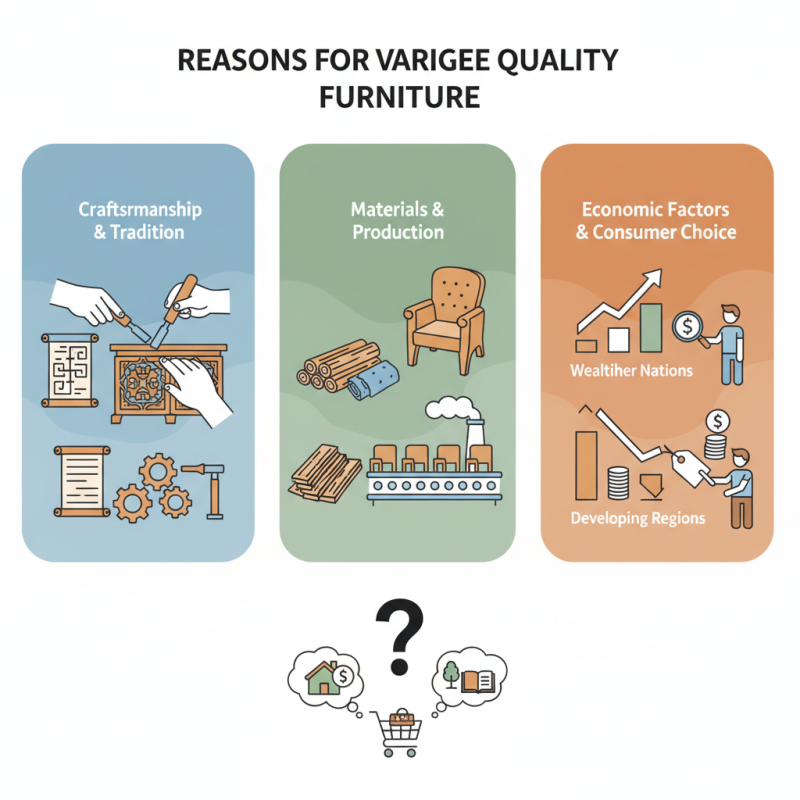
Factors Influencing Furniture Quality Across Different Regions
Furniture quality varies significantly worldwide due to several key factors. One prominent influence is local material availability. For instance, regions rich in hardwoods produce sturdier pieces, while others may rely on softer woods or synthetic alternatives. This impacts durability and longevity, leading to a wide range of experiences for consumers.
Another crucial element is craftsmanship. Skilled artisans in places like Italy and Japan prioritize traditional techniques and attention to detail. In contrast, mass production in other areas often sacrifices quality for speed. According to the International Furniture Fair report, furniture made in regions emphasizing craftsmanship can last three to five times longer than mass-produced items. This discrepancy not only affects the furniture's lifespan but also its aesthetic appeal.
Economic factors play a role as well. Countries with lower labor costs often produce cheaper furniture, which can sometimes result in inferior quality. However, this does not always mean a lack of quality. Some manufacturers find ways to balance cost and craftsmanship. The challenge lies in ensuring consistent quality across different markets. The varying furniture quality highlights the need for consumers to research and understand what influences their purchases.
Cultural Preferences and Their Impact on Furniture Design
Cultural preferences significantly shape furniture design worldwide. Designers often reflect their community's values in their work. For instance, in Scandinavian cultures, minimalism reigns supreme. Clean lines and functional design resonate with local values of simplicity and sustainability. Reports indicate that 30% of consumers prefer minimalist furniture styles, which reveal their desire for functionality over excess.
In contrast, cultures like those in the Middle East lean toward ornate designs. Rich fabrics and intricate patterns fill these spaces, representing history and tradition. A survey by the International Furniture Design Association shows that around 25% of global consumers favor traditional styles, indicating a longing for cultural heritage.
However, this variety brings challenges. The global market demands flexibility, yet cultural preferences can complicate production. Many furniture makers struggle to balance local tastes with universal appeal. This disparity requires reflection and adaptability from designers. A deeper understanding of diverse cultural values is essential for success in the competitive furniture market.
Material Availability and Its Effect on Furniture Production
Material availability plays a crucial role in the quality of furniture produced worldwide. Countries rich in natural resources, such as hardwoods, can create high-quality furniture. In contrast, regions with limited access to quality materials face challenges. Data from the Global Wood Housing Market Report indicates that about 35% of furniture worldwide is made from wood. Yet, countries with less affordable wood often resort to cheaper alternatives, impacting their product quality.
Materials also affect craftsmanship. Skilled artisans prefer using premium resources. For instance, a report by the International Furniture Fair revealed that 70% of premium furniture brands utilize imported wood. This can increase costs and create reliance on global supply chains. The gap in material access leads to noticeable differences in the durability and aesthetics of pieces. Lesser-quality materials may lead to quicker wear and tear, causing concern among consumers seeking long-lasting furniture.
Additionally, environmental factors influence material choices. Sustainable practices are evolving, pushing manufacturers to seek eco-friendly alternatives. However, this can sometimes compromise quality. According to industry analysts, up to 40% of furniture is made from synthetic materials, which may not last. The balance between availability, quality, and sustainability continues to be a challenge in the global furniture market.
Labor Practices and Economic Conditions in Global Furniture Markets
The global furniture market is vast and diverse. One significant factor in furniture quality is labor practices in different regions. In countries where labor rights are strong, artisans may create pieces with higher craftsmanship. Conversely, in areas with lax labor regulations, mass production often leads to inferior quality. A recent report by the International Labour Organization highlights that 25% of wood furniture production occurs in regions with poor labor standards. This raises questions about ethics in sourcing and manufacturing.
Economic conditions also play a crucial role. Countries with robust economies tend to invest more in sustainable materials and skilled labor. According to a McKinsey report, premium furniture segments are growing, particularly in developed markets. Yet, this growth does not always translate to better quality for consumers. In developing nations, the focus on cost can compromise material integrity. Furthermore, the disconnection between pricing and craftsmanship can confuse buyers.
The interplay of labor practices and economic conditions shapes the furniture landscape. Well-crafted items may come at a higher price, reflecting fair labor practices. But consumers need to be aware of production backgrounds. Not all beautiful furniture is made ethically or sustainably. This complexity necessitates a deeper understanding of where and how furniture is produced. The challenge lies in making informed choices while navigating this intricate market.
Technological Advancements and Their Role in Furniture Manufacturing
Furniture quality varies significantly worldwide. This variation often stems from technological advancements in manufacturing processes. According to a report by the International Furniture Manufacturers Federation, innovative techniques have boosted productivity. Modern machines can create intricate designs quickly. However, not all regions embrace these technologies equally. Some countries still rely on traditional craftsmanship, which can lead to varied quality.
In regions where technology is utilized, production costs can decrease. For example, automated tools can minimize waste. A study by the Wood Products Council indicates that factories using advanced machinery operate at 30% higher efficiency. Yet, this shift can sometimes compromise craftsmanship and personalized service. Balance is key in this evolving landscape.
Tip: When purchasing furniture, consider both technology and craftsmanship. Look for pieces that blend modern techniques with artisanal skills. This combination often results in higher quality and unique designs.
Another important aspect is sustainability. Technological advancements can enhance eco-friendly practices. Factories can now use less energy and produce fewer emissions. Still, not all manufacturers prioritize these practices. Research the companies you buy from to ensure they meet environmental standards.
Why Does Furniture Quality Vary So Much Around the World? - Technological Advancements and Their Role in Furniture Manufacturing
| Country |
Average Quality Rating (1-10) |
Type of Manufacturing Technology |
Common Materials Used |
Average Production Cost (per piece in USD) |
| USA |
8 |
CNC Machining |
Wood, Metal, Upholstery |
350 |
| Germany |
9 |
Automated Production Lines |
Solid Wood, Plywood |
400 |
| China |
6 |
Mass Production |
Particle Board, MDF |
150 |
| Italy |
8 |
Handcrafted Techniques |
High-Quality Wood, Leather |
500 |
| India |
7 |
Traditional Craftsmanship |
Teak, Sheesham |
200 |
FAQS
: Material availability greatly influences the quality of furniture produced globally. High-quality hardwoods lead to superior furniture.
Regions with limited access to quality materials often struggle to produce durable products. This compromises overall furniture quality.
Approximately 35% of furniture worldwide is made from wood. The rest may use cheaper alternatives, affecting durability.
Skilled artisans prefer premium materials. Using quality resources can enhance craftsmanship and artistry in their work.
Technological advancements can increase production efficiency. However, they may compromise craftsmanship and personalized service in some regions.
Up to 40% of furniture may be made from synthetic materials. These alternatives can negatively affect durability and longevity.
Manufacturers face challenges balancing eco-friendly practices and quality materials. Sustainable options may sometimes reduce the product's longevity.
Consumers should consider both technology and craftsmanship. Look for pieces that blend modern techniques with artisanal skills for better quality.
Technological advancements can help factories reduce energy use and emissions. Not all manufacturers, however, prioritize these eco-friendly initiatives.
Conclusion
The question of "why does furniture quality vary so much" is influenced by several key factors across different regions. Cultural preferences play a significant role, as they dictate design choices and craftsmanship methods. For instance, some cultures prioritize aesthetics over durability, while others may focus on functional designs that suit local lifestyles. Additionally, the availability of materials can significantly affect production quality; regions rich in hardwoods may produce higher-quality furniture compared to those reliant on less durable resources.
Labor practices and economic conditions also impact furniture quality. In regions where labor is scarce or poorly compensated, the emphasis may shift towards cost-cutting measures that compromise quality. Conversely, areas with skilled labor and fair economic conditions tend to produce more meticulous craftsmanship. Lastly, technological advancements have transformed furniture manufacturing, allowing for greater precision and innovation. However, access to these technologies can differ greatly between regions, further contributing to the disparities in furniture quality observed globally.

 Salonix Furniture